20 Cowboy Bangs Hairstyles to Try in 2026

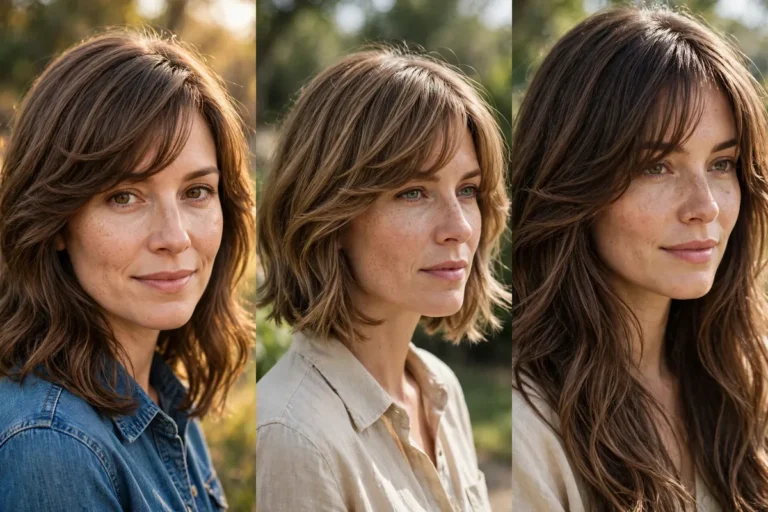
20 Cowboy Bangs Hairstyles to Try in 2026
Cowboy bangs are the fringe that softens a whole haircut without changing its length. They are fuller and softer than a wispy fringe, swept to the side with a relaxed, Western-inspired ease — the kind of fringe that looks like it was shaped by a wide-brimmed hat and a day outdoors rather than a ruler and a razor. Unlike curtain bangs, which part in the centre and fall wispy on either side of the face, cowboy bangs sit heavier, sweep across the forehead, and frame one side of the face with a soft, lived-in curve. They work on bobs and long hair alike, on straight, wavy and curly textures, and they grow out gracefully, which is half the reason they have become the autumn-winter fringe to ask for. These 20 cowboy bangs hairstyles for 2026 cover every length and hair type, so pick the one that fits your hair and let the fringe do the talking.
1. Classic Cowboy Bangs

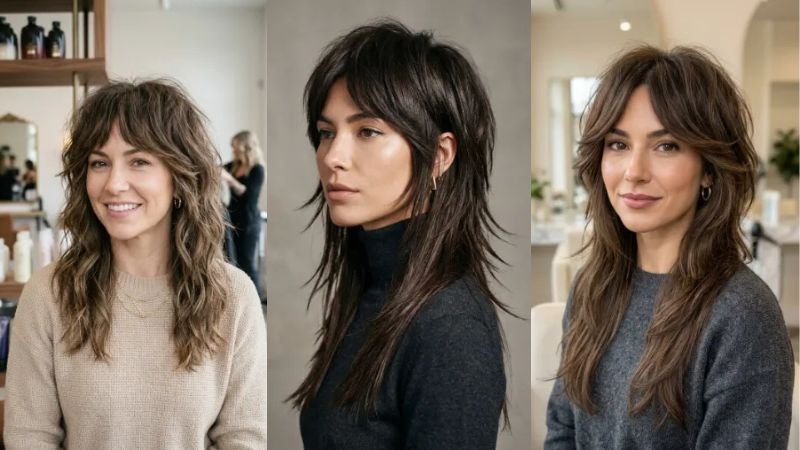
The look that defines the fringe: a full, soft bang swept gently to one side, long enough to graze the eyebrows and blend into the lengths. It is cut with a slight curve so the longest point sits at the outer corner of the eye and the shortest at the inner brow. Ask your stylist for a soft, side-swept fringe with no hard edge — the finish should look brushed, not sliced. It suits medium to long hair best, where the sweep has room to blend into the rest of the cut.
2. Cowboy Bangs on a Bob
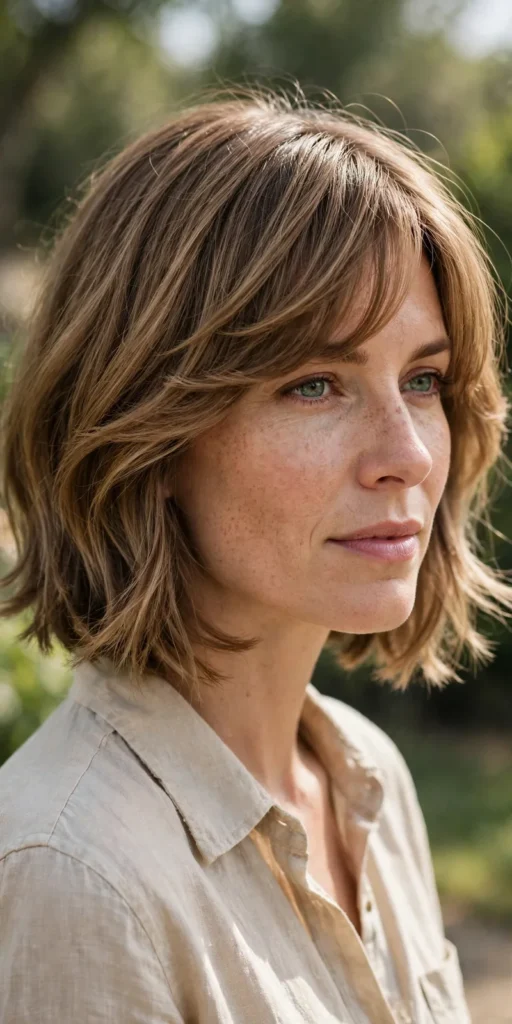
A bob with cowboy bangs is the most polished way to wear the fringe. The weight of the bang balances the clean line of the bob, and the side sweep keeps the whole cut from looking severe. A chin-length bob with a slight bend at the ends and a soft, swept fringe reads modern and effortless rather than retro. It is the easiest way to try cowboy bangs if you already have a bob, because the fringe is the only change you need.
3. Long Cowboy Bangs
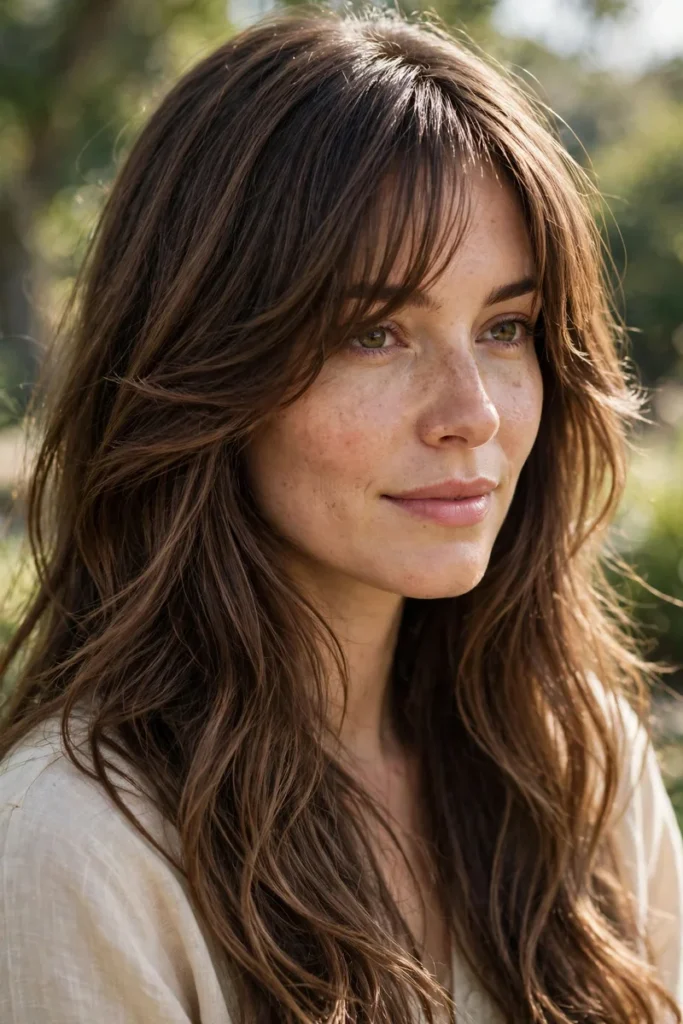
Long cowboy bangs fall past the eyebrows and melt into the face-framing layers, so the fringe becomes part of the haircut rather than a separate feature. They are the most forgiving version, because the length means they can be swept to either side, tucked behind the ear, or pushed back entirely on a lazy day. Ask for bangs that reach the cheekbones at their longest point. This is the version to choose if you want the look without committing to a short fringe.
4. Cowboy Bangs with Soft Layers
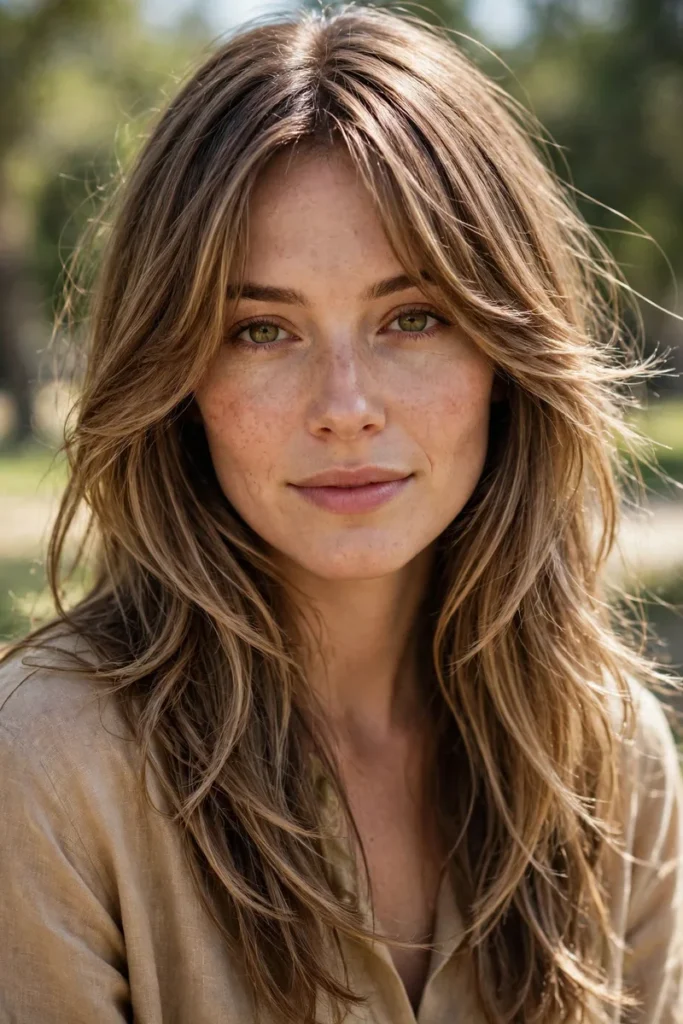
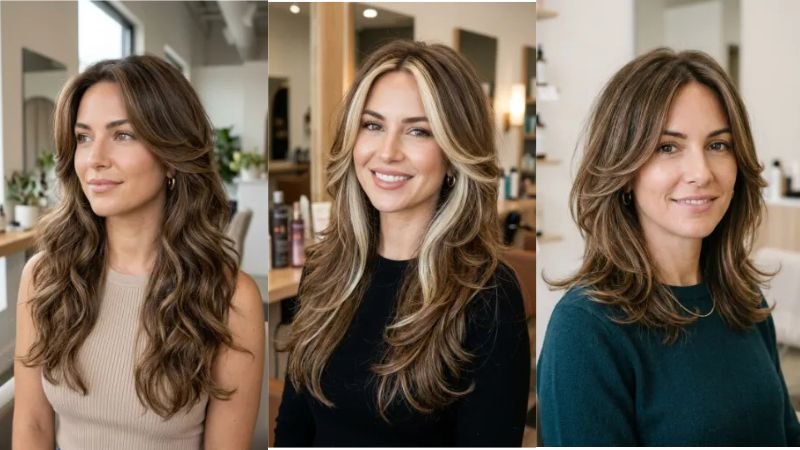
Soft layers are the natural partner for cowboy bangs — the fringe sweeps into the layers instead of stopping abruptly, so the whole cut moves as one. The layers start at the cheekbones and blend down through the lengths, which keeps the fringe from looking heavy. It suits thick hair especially well, because the layers remove weight while the fringe keeps the shape. Ask your stylist to point-cut the ends so nothing reads blunt.
5. Cowboy Bangs with Beach Waves

Beach waves give cowboy bangs the relaxed, sun-worn finish the fringe is named for. The waves break up the sweep so it reads dimensional and lived-in, like hair that has spent a day outdoors. Use a large-barrel curling iron or a salt spray, then shake the waves out with your fingers rather than brushing them. This is the easiest style on the list to do at home, and it suits every length from a bob down.
6. Cowboy Bangs on Curly Hair
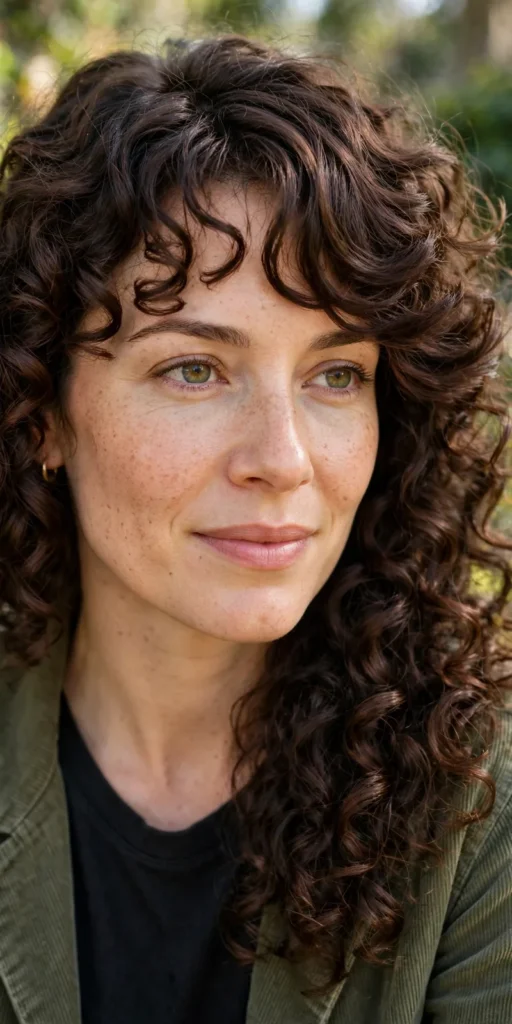
Curls and cowboy bangs are a natural match — the fringe falls in soft, springy curves that frame the face without ever looking stiff. Cut the bangs dry, curl by curl, so the length accounts for shrinkage, and keep them longer than you think you need. The result is a fringe that moves with the rest of the hair instead of fighting it. Keep curls hydrated with a leave-in conditioner, because dry curls make any fringe look frizzy.
7. Cowboy Bangs with a Deep Side Part
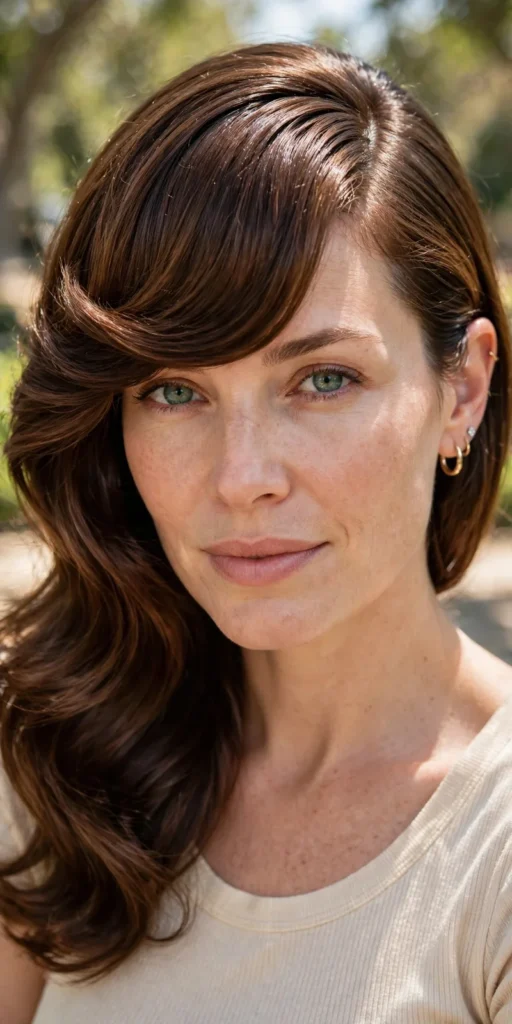
A deep side part is the fastest way to make cowboy bangs look intentional. Sweeping the fringe from a low part on one side creates a heavy, glossy sweep across the forehead, while the lighter side tucks neatly behind the ear. It adds instant glamour to a simple blow-dry and works on straight, wavy and curly hair alike. Pair it with a shine spray for the full effect.
8. Cowboy Bangs with a Middle Part
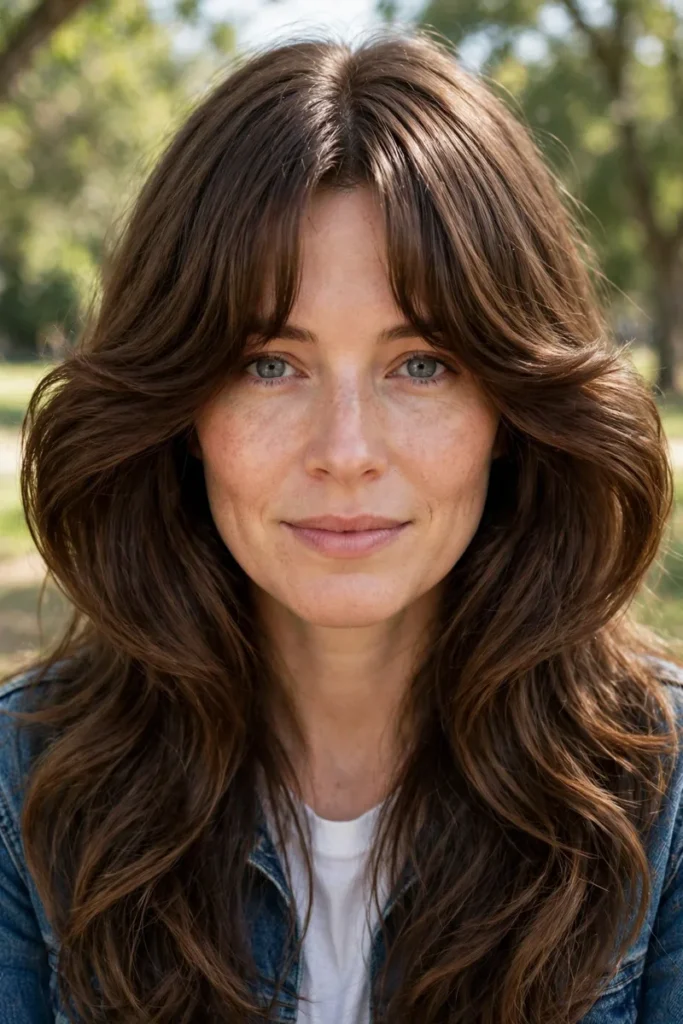
A middle part with cowboy bangs sounds like a contradiction, but it works when the fringe is long enough: the bangs split softly in the centre and fall in two heavy, sweeping sections instead of wispy curtain pieces. The difference from curtain bangs is the weight — these are fuller, longer and softer at the ends, so they frame the face like a curtain drawn half-open. It is the version to try if you like a centre part but want more fringe than a curtain bang gives you.
9. Textured Cowboy Bangs

Textured cowboy bangs are point-cut and feathered at the ends so the sweep looks airy rather than solid. The texture stops the fringe from sitting like a heavy curtain on the forehead and gives it movement with every turn of the head. It suits fine hair especially well, because the feathered ends make the fringe look thicker than it is. Ask for the texture to be cut in, not razored, so the ends stay soft.
10. Cowboy Bangs with Face-Framing Layers
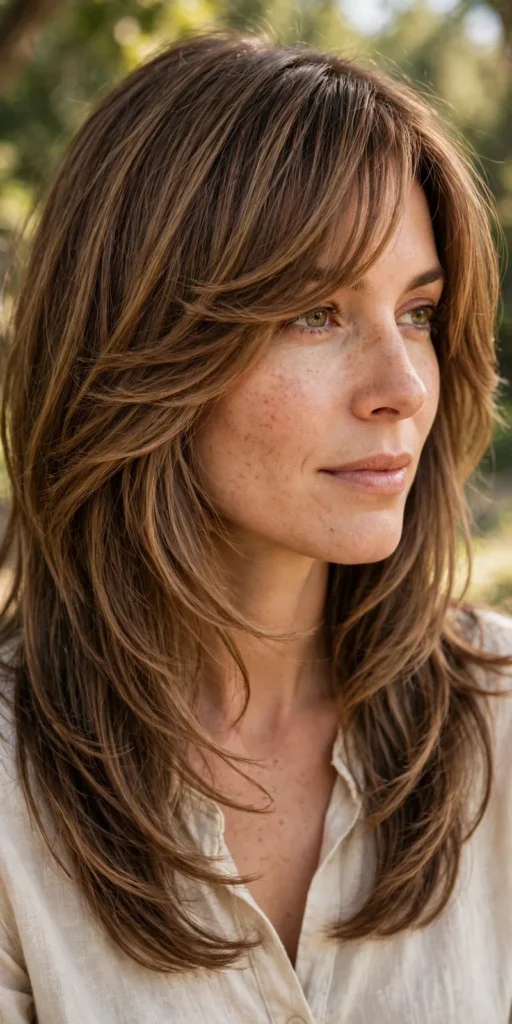
Face-framing layers extend the sweep of the fringe down past the cheekbones, so the bang becomes the first step in a longer, softer frame around the whole face. The layers start where the bangs end, which makes the grow-out almost invisible — as the fringe gets longer, it simply becomes a layer. This is the smartest choice if you want cowboy bangs but worry about the awkward growing-out stage.
11. Cowboy Bangs on a Lob

The lob — a long bob that sits just above the shoulders — is the most wearable length for cowboy bangs. It is short enough to look polished and long enough to tie back, and the swept fringe keeps it from reading too severe. A blunt cut gives it a sharp, editorial edge; soft layers give it movement. Either way, the fringe does the heavy lifting. It suits fine hair especially well, because the weight of the bang makes the ends look thicker.
12. Cowboy Bangs with a High Ponytail

A high ponytail with cowboy bangs is the Western look in its purest form — hair swept up and back, fringe swept across the forehead, nothing fussy anywhere. The bangs soften the severity of the ponytail and keep the face framed even when the rest of the hair is pulled away. Wrap a strand of hair around the base of the ponytail to hide the elastic. It is the quickest style on this list and the one that photographs best.
13. Cowboy Bangs with a Low Bun

A low bun with cowboy bangs is the dressed-up version of the fringe — soft, swept bangs in front, a relaxed bun at the nape, and a few loose pieces to keep it from looking too done. It works for weddings, parties and any occasion where you want to look polished without a full updo. Leave the bun slightly undone rather than slicked tight, so the softness of the fringe is matched at the back. A couple of pins are all it needs.
14. Cowboy Bangs with a Half-Up Style

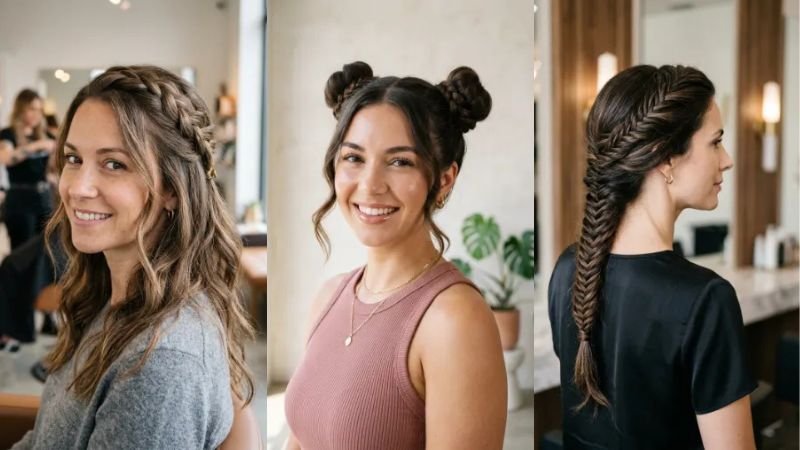
A half-up style with cowboy bangs keeps the fringe as the star while the top section is pulled back out of the way. The sweep across the forehead balances the height at the crown, and the loose lengths underneath keep the whole look soft. It suits thick hair best, because the half-up section removes bulk from the top while the fringe keeps the face framed. Secure it with a claw clip or a simple tie for an everyday version.
15. Cowboy Bangs for Thick Hair
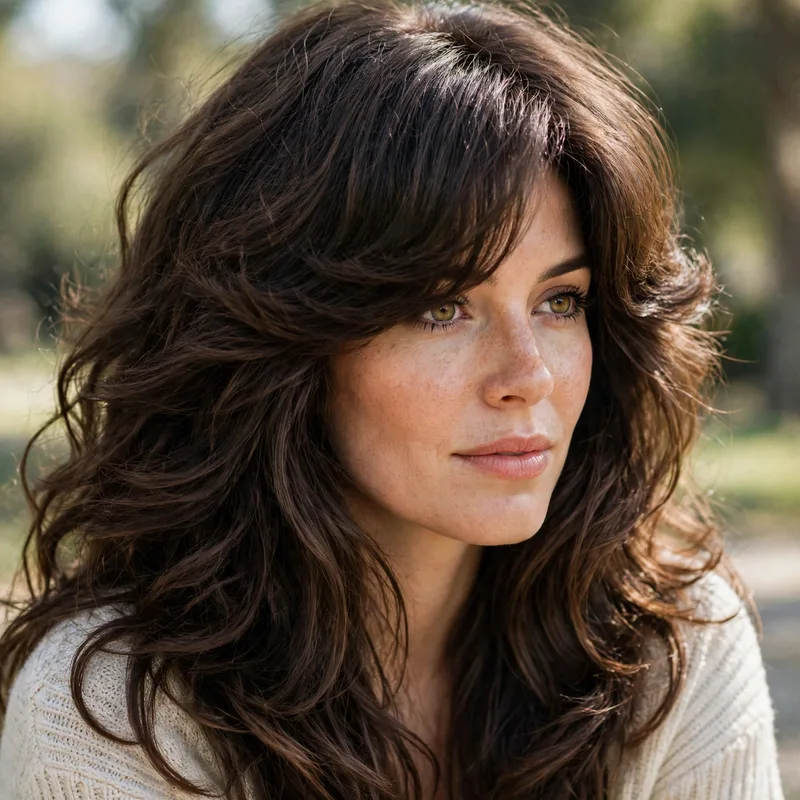
Thick hair is where cowboy bangs truly shine, because the fringe has the weight to hold its sweep all day without collapsing. The trick is thinning the fringe just enough — ask your stylist to remove bulk from underneath rather than shortening it, so the sweep stays long and soft. Pair it with long layers through the lengths to keep the whole cut from looking heavy. This is the version that needs the least styling, because the hair does the work itself.
16. Cowboy Bangs for Fine Hair

Fine hair can wear cowboy bangs beautifully, as long as the fringe is cut to look fuller than it is. Keep the bangs slightly shorter and more textured, so the feathered ends create the impression of density, and blow-dry them with a round brush for lift at the roots. A volumising mousse worked through damp bangs before drying makes all the difference. Avoid heavy oils or serums on the fringe — they flatten fine hair fast.
17. Cowboy Bangs with a Blowout
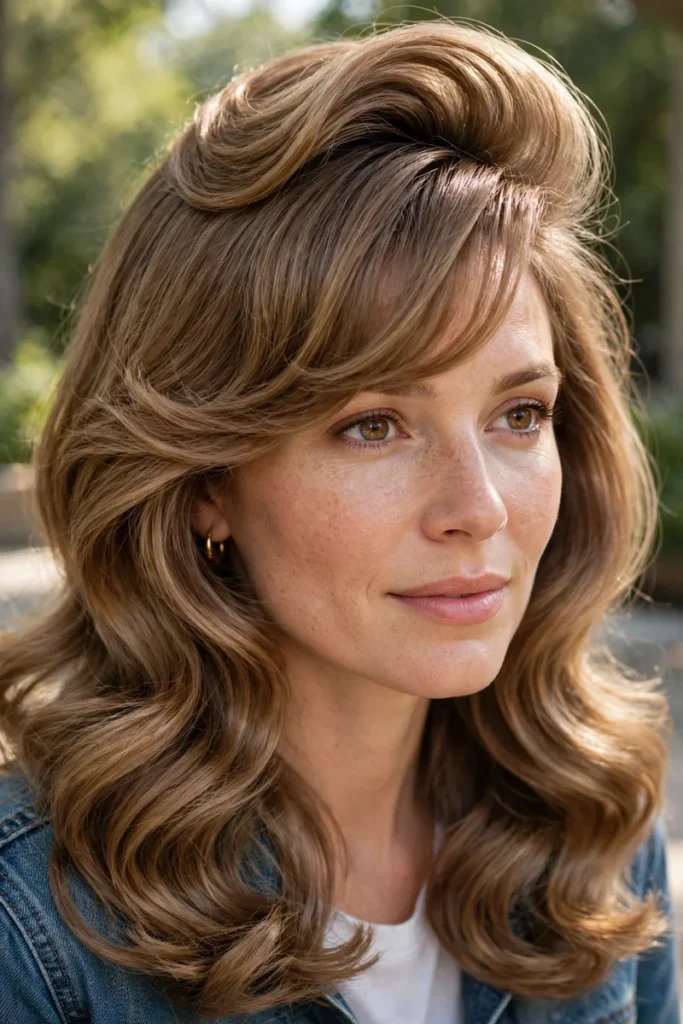
A blowout with cowboy bangs is the salon finish at home: the fringe swept across the forehead with volume at the roots, the lengths smooth and bouncy. Blow-dry the bangs first, while they are at their wettest, using a round brush and directing the air across the forehead in the direction of the sweep. Then blow out the rest of the hair in sections. It is the most polished version on this list, and the one that shows off the fringe best in photographs.
18. Cowboy Bangs with Soft Curls
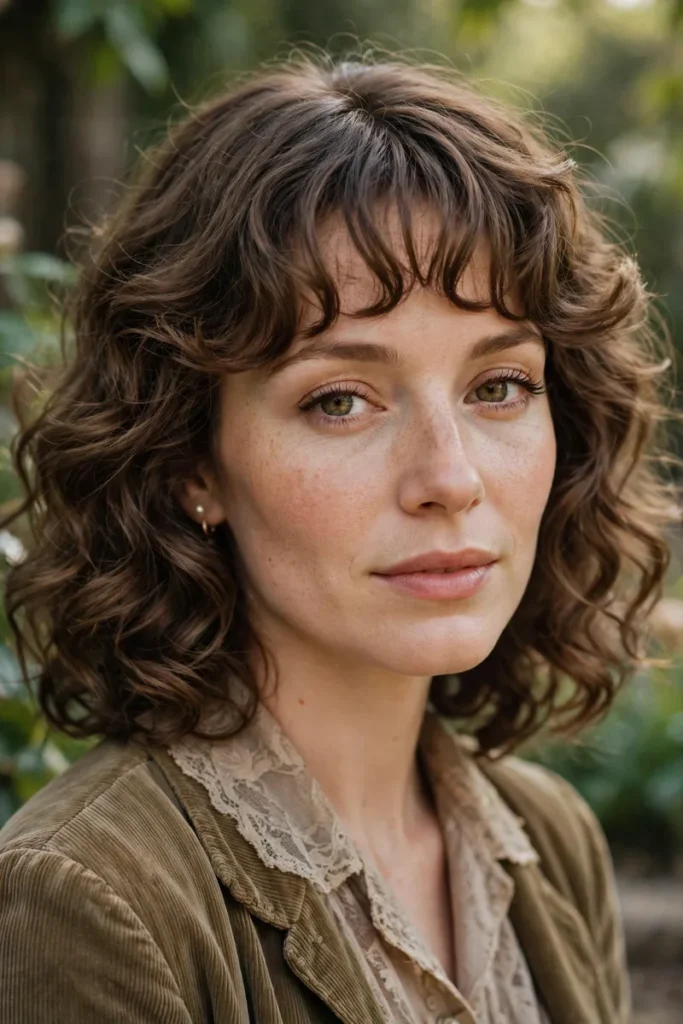
Soft curls turn cowboy bangs into a romantic, vintage-leaning fringe — the sweep falls in gentle waves that echo the curls through the rest of the hair. Use a medium-barrel curling iron on the lengths and a light bend on the fringe itself, then brush the curls out with your fingers for softness. It suits medium to long hair and is the prettiest version for evenings out. A light-hold hairspray keeps the sweep in place without stiffening it.
19. Cowboy Bangs with a Hat
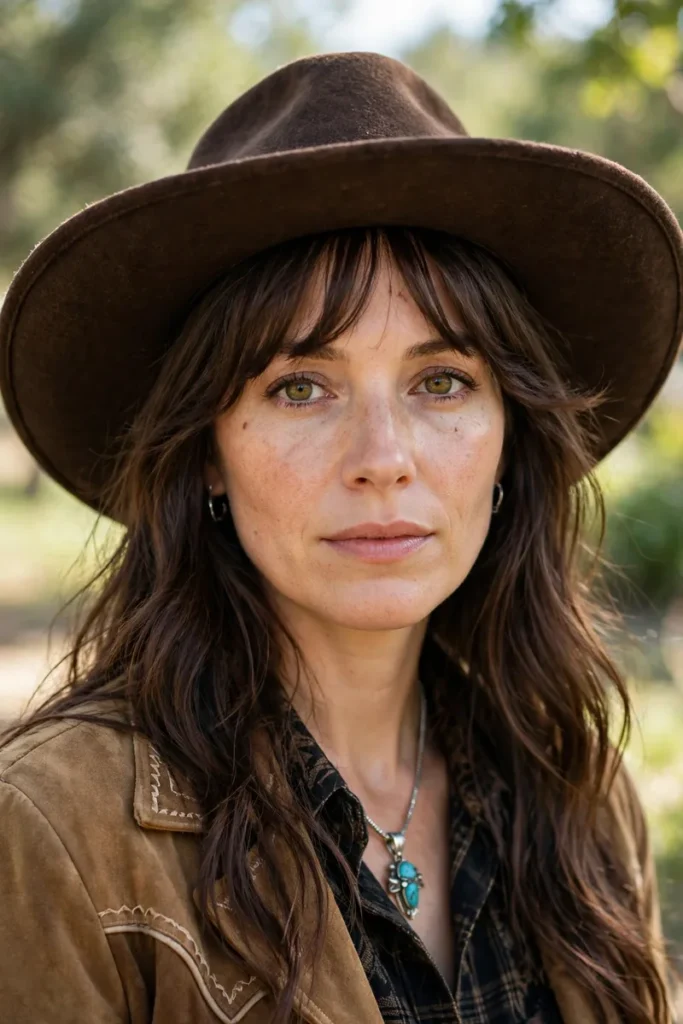
Cowboy bangs were made for hats — a wide-brimmed felt hat or a classic cowboy hat sits naturally above a swept fringe, and the fringe softens the line where the hat meets the forehead. The bangs peek out underneath the brim, framing the eyes while the hat does the rest. It is the most on-theme style on this list and the most practical in cold weather, because the hat keeps the fringe from blowing across the face. Just be ready for a little hat hair at the crown.
20. The Grown-Out Cowboy Bangs
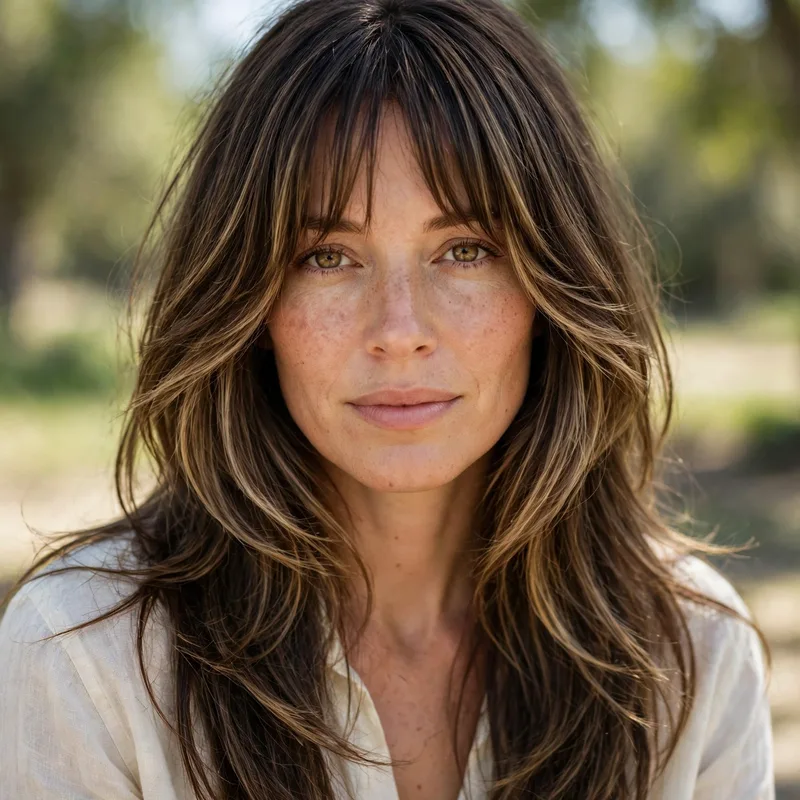
The grown-out version is cowboy bangs at their most relaxed — the fringe has reached the cheekbones and blends fully into the face-framing layers, so it reads as long, sweeping layers rather than a fringe at all. This is the stage other fringes dread and cowboy bangs are built for, because the side sweep means there is no awkward middle length to hide. If you are growing your bangs out, this is the destination: keep the ends trimmed, keep the sweep, and let the layers take over.
How to Style Cowboy Bangs at Home
Cowboy bangs are easy to style once you know the order: always dry the fringe first, while it is at its wettest, because bangs dry in whatever direction they fall. Use a round brush and direct the air across the forehead in the direction of the sweep, lifting at the roots for volume. A pea-sized amount of styling cream smooths the ends without weighing them down. If your fringe falls flat by midday, a quick blast with a blow-dryer and a round brush revives the sweep in under a minute. For second-day hair, a little dry shampoo at the roots lifts the fringe and absorbs oil. Trim the ends yourself only with sharp hairdressing scissors, a tiny snip at a time — or better, book a fringe trim, which most salons offer cheaply or free between cuts.
Cowboy Bangs vs Curtain Bangs
Cowboy bangs and curtain bangs are cousins, not twins, and the difference is in the part and the weight. Curtain bangs part in the centre and fall wispy on either side of the face, with a light, airy finish and shorter pieces at the middle. Cowboy bangs sweep to one side, sit fuller and heavier, and fall longer, with a soft curve that frames one side of the face more than the other. Curtain bangs suit anyone who wants a barely-there fringe that blends into layers; cowboy bangs suit anyone who wants a real statement fringe that still grows out gracefully. Curtain bangs need a centre part to work; cowboy bangs need a side sweep. If your hair is fine and you want lightness, choose curtain bangs. If your hair is thick or you want a bolder, Western-inspired fringe with more presence, choose cowboy bangs — and if you already have curtain bangs, growing them a little longer and sweeping them to the side is the easiest way to try the cowboy version.
Frequently Asked Questions
What are cowboy bangs? Cowboy bangs are a soft, full, side-swept fringe inspired by Western style — longer and heavier than a wispy fringe, swept across the forehead with a relaxed curve. They refresh a haircut without changing its length and work on bobs and long hair alike.
Are cowboy bangs the same as curtain bangs? No. Curtain bangs part in the centre and fall wispy on both sides of the face. Cowboy bangs sweep to one side, are fuller and longer, and frame one side of the face with more weight. They are a bolder, softer fringe.
Do cowboy bangs suit round faces? Yes. The side sweep creates a diagonal line across the forehead, which lengthens the face visually and breaks up its roundness. Keep the fringe longer — past the eyebrows — and sweep it to the side rather than straight across for the most flattering effect.
How long do cowboy bangs take to grow out? Because they are side-swept and long to begin with, cowboy bangs grow out more gracefully than most fringes. Within six to eight weeks they blend into face-framing layers, and a quick trim at the salon keeps the sweep tidy in the meantime.
Can I wear cowboy bangs with curly hair? Yes, but they should be cut dry, curl by curl, and kept longer than you think you need to allow for shrinkage. The fringe falls in soft curves that frame the face, and a leave-in conditioner keeps the curls defined rather than frizzy.
How do I style cowboy bangs in the morning? Dry them first, while they are wettest, with a round brush, directing the air across the forehead in the direction of the sweep. A little styling cream smooths the ends, and dry shampoo at the roots revives them on second-day hair.
Cowboy bangs are the fringe for anyone who wants a change without a commitment — fuller and softer than a wispy fringe, bolder than curtain bangs, and easy to grow out when you are ready for something new. Whether you wear them on a bob, in long layers, curled, or under a wide-brimmed hat, the side sweep does the work: it frames the face, softens the whole cut, and looks like it took no effort at all. Pick your favourite from this list, ask your stylist for a soft, side-swept fringe with no hard edge, and enjoy a haircut that feels brand new without losing a centimetre of length.